Bloom's 2 Sigma Problem: Why 1-on-1 Tutoring Works and How AI Solves It

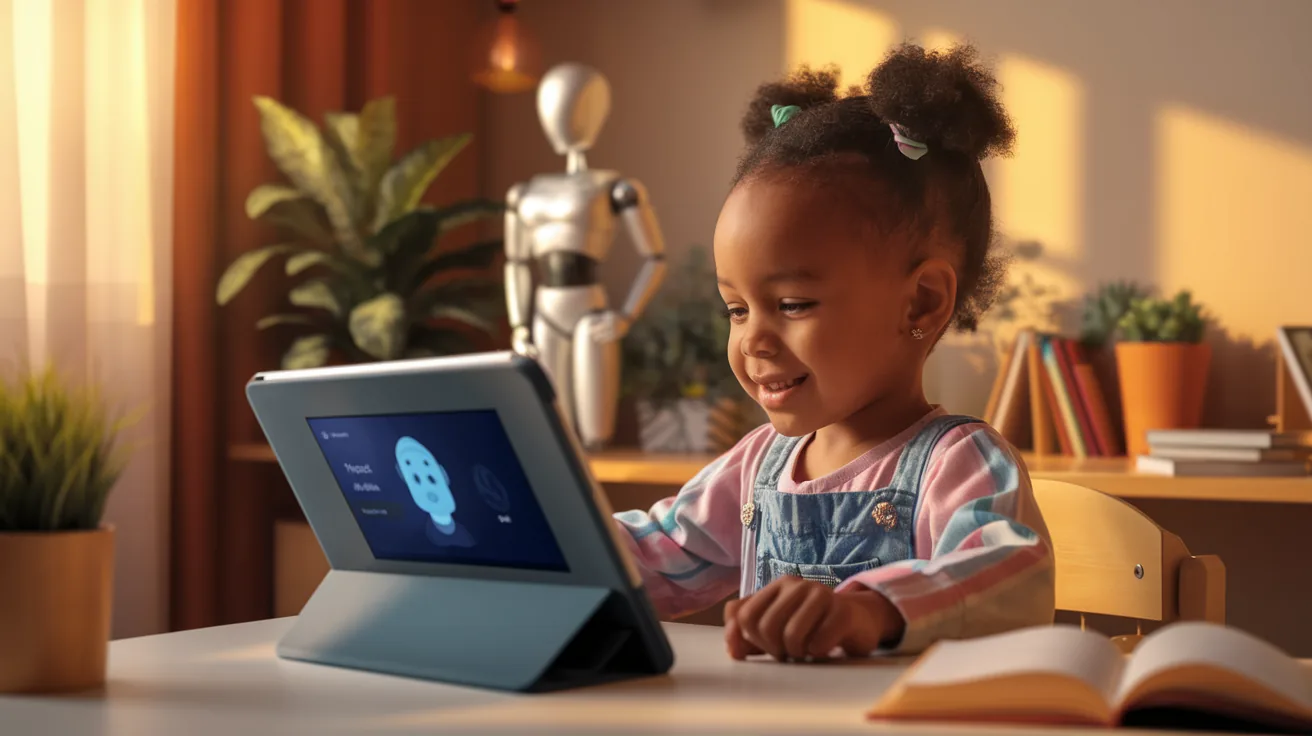
A young child sitting at a desk with a warm smile, looking at a tablet screen showing an AI tutor interface, with soft g
← All articles

In 1984, educational psychologist Benjamin Bloom published research that would haunt educators for decades. His findings were simultaneously inspiring and devastating: students who received one-to-one tutoring performed two standard deviations better than those taught in conventional classrooms. In practical terms, this meant the average tutored student outperformed 98% of students in traditional classroom settings.

Bloom called this "the 2 sigma problem" — not because it was problematic that tutoring worked, but because providing every child with a personal tutor seemed economically and logistically impossible. For forty years, we've known the solution but couldn't afford to implement it.

Until now.

Today's AI tutoring platforms are finally cracking Bloom's 2 sigma problem, making truly personalised one-to-one instruction accessible to every child. This isn't about replacing teachers — it's about giving every student the individualised attention that Bloom proved was transformative. Here's what the research tells us, why it works, and how artificial intelligence is democratising what was once available only to the wealthy.

Understanding Bloom's Original Research

Benjamin Bloom's 1984 study, "The 2 Sigma Problem: The Search for Methods of Group Instruction as Effective as One-to-One Tutoring," examined three learning conditions:

The results were staggering. Students in the tutoring condition performed two standard deviations (2 sigma) above the control group. To put this in perspective:

Bloom himself was surprised by the magnitude of the effect. He challenged the educational community to find methods of group instruction as effective as one-to-one tutoring, knowing full well that individual tutors for every student wasn't financially feasible for most families or school systems.

Why One-to-One Tutoring Is So Powerful

Understanding why tutoring works so spectacularly well helps us appreciate how AI tutoring is transforming primary education. The research points to several key factors:

Immediate Feedback Loops

In a classroom of 30 students, a child who misunderstands a concept might not realise it until homework or a test — hours or days later. By then, they've built further learning on a shaky foundation. A tutor provides immediate correction, catching misconceptions the moment they arise.

Educational researcher John Hattie's extensive meta-analyses consistently show that feedback is among the most powerful influences on learning achievement, with an effect size of 0.70 — meaning it can nearly double the rate of learning. But feedback must be timely, specific, and focused on the task rather than the person.

Adaptive Pacing and Content

Every child learns at a different pace. Some grasp place value immediately; others need more time with concrete manipulatives before abstracting the concept. In conventional classrooms, teachers must choose a pace that inevitably leaves some students bored and others lost.

Lev Vygotsky's concept of the "Zone of Proximal Development" explains why this matters so much. Learning happens most effectively when material is just beyond a student's current ability — challenging enough to require effort but not so difficult as to cause frustration. One-to-one tutoring keeps students in this optimal zone continuously, while classroom instruction can only aim for the middle of the distribution.

Personalised Scaffolding

A skilled tutor doesn't just adjust pacing; they adjust their entire approach based on the individual child. Some children learn best through visual representations, others through verbal explanations, still others through physical manipulation of objects. Tutors can deploy different strategies, examples, and explanations tailored to each learner's strengths and preferences.

This is what we mean by personalised learning — not just going faster or slower, but fundamentally adapting the learning experience to the individual.

Increased Time on Task

Classroom studies show that students spend significant time waiting — waiting for the teacher's attention, waiting for classmates to finish, waiting for disruptions to be managed. In one-to-one tutoring, nearly all time is productive learning time. The student is actively engaged throughout the session, not passively listening while the teacher addresses someone else's question.

Mastery Before Progression

Perhaps most importantly, tutoring naturally incorporates mastery learning. A tutor won't move to fractions until the child has truly mastered multiplication. In classrooms, curriculum pacing often demands moving forward regardless of whether all students have achieved mastery, leading to cumulative gaps in understanding.

Bloom's own research on mastery learning (separate from the tutoring study) showed effect sizes of approximately 1.0 sigma — remarkable on its own, but enhanced further when combined with individualised instruction.

The 2 Sigma Problem: Why We Couldn't Scale It

If one-to-one tutoring is so effective, why haven't we simply given every child a tutor? The answer is brutally simple: cost.

A qualified tutor in the UK typically charges £25-50 per hour, often more for specialists or in London. To provide even five hours per week of tutoring per child would cost £125-250 weekly, or roughly £5,000-10,000 annually. For a family with two or three children, this becomes impossible for all but the wealthiest households.

At a societal level, providing every primary school child in the UK with a full-time tutor would require approximately 3.5 million tutors — more than the entire current teaching workforce. The logistics are simply untenable.

This creates what researchers call an "excellence gap" that mirrors socioeconomic divides. Wealthy families can afford tutors; others cannot. The children who would benefit most from additional support often have the least access to it.

How AI Tutoring Addresses Bloom's Challenge

Modern AI tutoring platforms are the first technology genuinely capable of replicating the key mechanisms that make human tutoring effective. Here's how they address each element:

Instant, Personalised Feedback

AI tutors analyse every answer in real-time, providing immediate, specific feedback. When a child makes an error in calculation, the AI doesn't just mark it wrong — it diagnoses the type of error (conceptual misunderstanding versus procedural mistake) and responds accordingly.

For instance, if a child answers "17 + 5 = 21," an AI tutor recognises this as a probable counting error (adding 4 instead of 5) rather than a conceptual misunderstanding of addition. It might respond: "Let's check that together. Start at 17 and count up 5 with me: 18, 19, 20, 21, 22. What did we get?" This specificity mirrors what expert human tutors do instinctively.

Truly Adaptive Learning Paths

While human tutors adapt based on observation and intuition, AI systems can analyse thousands of data points to determine precisely where a student sits in their learning journey. They identify not just what a child can and cannot do, but why they're struggling with particular concepts.

If a child struggles with two-digit multiplication, the AI might trace the difficulty back to incomplete mastery of single-digit multiplication facts, or perhaps to a shaky understanding of place value. It then adjusts the learning path accordingly, providing targeted practice in the foundational area before returning to the more complex skill.

Unlimited Patience and Practice

Children sometimes need to see the same concept explained three, five, or ten different ways before it clicks. An AI tutor never becomes frustrated, never tires, and can generate unlimited variations of practice problems tailored to the child's current understanding.

This is particularly valuable for children who need more time than classroom pacing allows, or who feel self-conscious asking their teacher to explain something "one more time" when classmates have already moved on.

Available Whenever Learning Happens

Unlike human tutors who must be scheduled days in advance, AI tutoring is available the moment a child encounters difficulty with homework, or wants to explore a topic that sparked their curiosity. This "just-in-time" support means questions are answered while the child is actively engaged with the material, not hours or days later.

For parents concerned about screen time versus learning time, it's worth noting that time spent with an AI tutor is fundamentally different from passive screen consumption — it's active, cognitively demanding work with continuous interaction and feedback.

Affordable Access for All

Perhaps most importantly, AI tutoring delivers these benefits at a fraction of the cost of human tutoring. Where private tutoring might cost £5,000-10,000 annually, AI tutoring platforms typically cost £10-30 monthly — roughly 95% less expensive. This pricing makes truly personalised instruction accessible to families across all income levels.

The Research on AI Tutoring Effectiveness

While AI tutoring is relatively new, early research is promising. Studies on intelligent tutoring systems (the predecessors to today's AI tutors) consistently show effect sizes of 0.4 to 0.7 sigma — not quite Bloom's 2 sigma, but substantially better than conventional classroom instruction alone.

More recent studies specifically examining AI tutoring platforms show even stronger effects, particularly when the systems incorporate natural language processing and can engage in dialogue rather than just multiple-choice interactions. A 2023 study in the Journal of Educational Psychology found that primary students using AI tutoring for mathematics showed gains equivalent to 0.8 sigma compared to control groups receiving standard instruction only.

Importantly, the benefits were most pronounced for students who were initially struggling — exactly the population that needs support most. This suggests AI tutoring may help close achievement gaps rather than widening them, which has been a concern with some educational technology.

What AI Tutoring Can't (Yet) Replace Illustration for Bloom's 2 Sigma Problem: Why 1-on-1 Tutoring Works and How AI Solves It

It's crucial to be clear-eyed about current limitations. AI tutoring excels at certain aspects of learning but doesn't replicate everything a skilled human tutor provides:

Emotional connection and motivation: While AI can be encouraging and responsive, it doesn't form the same emotional bond that inspires some children to work harder because they don't want to disappoint their beloved tutor. Human relationships remain powerful motivators.

Complex creative work: AI tutors are strongest with structured subjects like mathematics, grammar, and reading comprehension. Open-ended creative writing, artistic expression, and complex scientific reasoning remain areas where human guidance is more nuanced and effective.

Metacognitive coaching: Teaching children how to learn — how to recognise when they're confused, how to seek help, how to persist through difficulty — requires the kind of reflective conversation that AI is only beginning to approximate.

Social and collaborative learning: Some of the most valuable learning happens through peer interaction, debate, and collaborative problem-solving. AI tutoring is inherently individual, though some platforms are exploring group features.

The Optimal Combination: AI + Human Instruction

Rather than viewing AI tutoring as replacing teachers or human tutors, the most promising model combines both:

Teachers focus on what they do best: Inspiring curiosity, facilitating discussion, teaching collaborative skills, providing emotional support, and working with students on complex, open-ended projects.

AI tutors handle personalised practice and mastery: Ensuring every child achieves fluency with foundational skills, providing unlimited practice opportunities, identifying gaps in understanding, and keeping students in their optimal zone of proximal development.

This isn't dissimilar to how many families already use a combination of classroom teachers and private tutors — but AI makes the tutoring component accessible and affordable for everyone, not just the privileged few.

Practical Implications for Parents

If you're a parent wondering how to leverage these insights:

Consider AI tutoring as a supplement, not a replacement: It works alongside excellent teaching, not instead of it. Think of it as giving your child access to a patient, knowledgeable study companion available whenever they need help.

Focus on mastery, not speed: One of Bloom's key insights was that mastery learning — ensuring true understanding before moving forward — is crucial. Don't push your child to race through content; use AI tutoring to ensure they've truly grasped each concept.

Watch for confidence changes: Often the first noticeable impact of AI tutoring isn't test scores but confidence. Children who previously felt "stupid at maths" begin to believe they can understand it — because for the first time, instruction is paced to their needs rather than the class average.

Use it strategically: AI tutoring is most valuable for subjects where your child needs extra support or wants to move ahead. It's less necessary for areas where they're already thriving in the classroom (unless they want enrichment).

Maintain balance: Like any tool, AI tutoring should be part of a balanced childhood that includes physical play, creative pursuits, family time, and unstructured exploration. Twenty to thirty minutes of focused AI tutoring several times per week can be highly effective without dominating a child's life.

Looking Forward: Democratising Excellence

For four decades, we've known that one-to-one tutoring produces extraordinary learning gains. For four decades, this knowledge has been frustratingly out of reach for most families and schools. Bloom himself wrote that the search for methods as effective as tutoring was "the search for variables that can give results that rival or exceed those obtained with one-to-one tutoring."

AI tutoring isn't perfect — it doesn't fully replicate every benefit of an expert human tutor. But it captures enough of the key mechanisms to dramatically improve learning outcomes at a cost that makes it accessible to virtually every family. It represents the first genuinely scalable solution to Bloom's 2 sigma problem.

More fundamentally, it challenges us to reimagine what's possible in education. For too long, we've accepted that only wealthy children could access truly personalised instruction. We've treated educational technology with scepticism, often rightly so given the parade of overhyped products that preceded current AI systems.

But the evidence is increasingly clear: we now have technology that can deliver key elements of one-to-one tutoring at scale. The question is no longer whether we can give every child personalised instruction, but whether we'll choose to do so.

For parents who want their children to have every opportunity to reach their potential, for educators committed to closing achievement gaps, and for anyone who believes educational opportunity should be determined by talent and effort rather than family wealth — AI tutoring represents something genuinely new: a practical, affordable solution to a problem we've understood for decades but couldn't solve.

The 2 sigma problem may finally have met its match.

Give Your Child a Tutor That Truly Understands Them

Fareed uses AI to adapt to your child's unique learning style. Join the waitlist for early access.

Join the Waitlist