
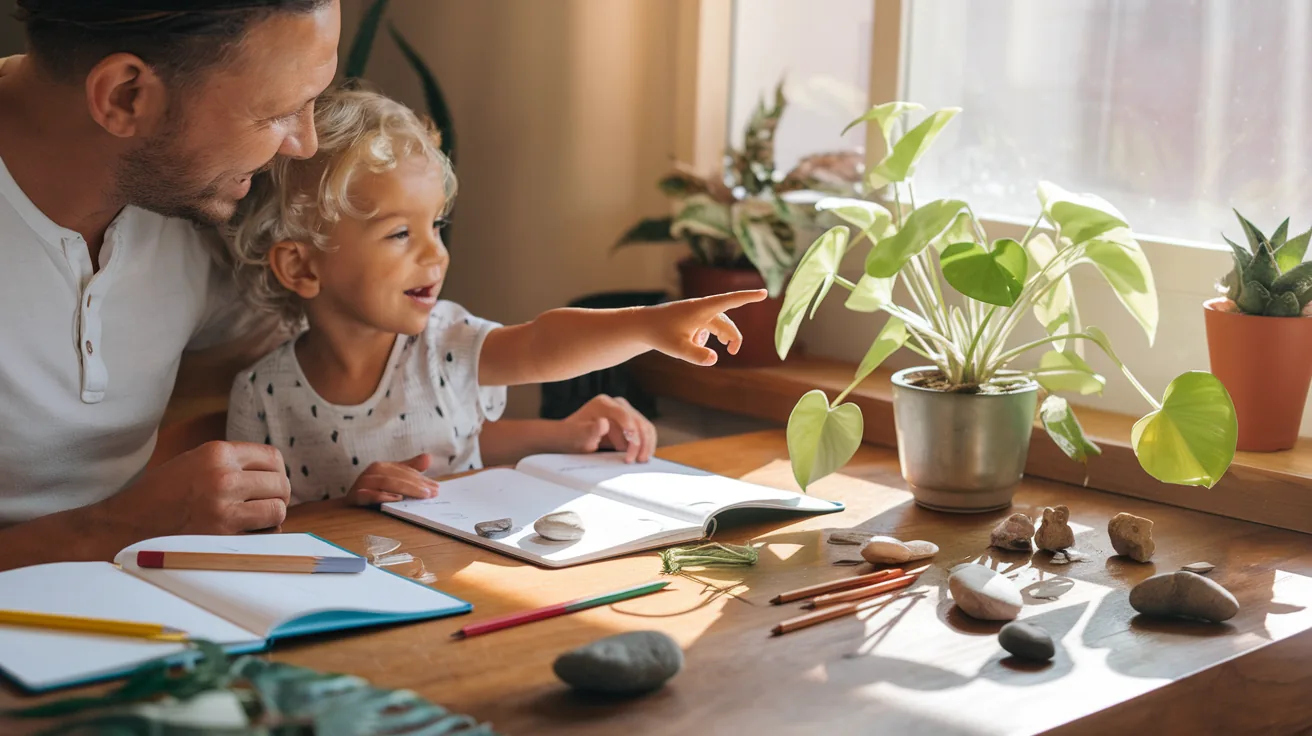
Year 3 marks a genuine turning point in your child's science education. Having spent Key Stage 1 exploring the world through observation and simple classification, your child now steps into more structured scientific enquiry — forming hypotheses, setting up fair tests, and beginning to understand cause and effect. The Year 3 science curriculum covers five topics: plants, light, forces and magnets, rocks, and animals including humans.
This guide walks through each topic, the common sticking points, and practical ways to support revision at home. Each topic also has its own longer article on this site.
Understanding the Year 3 Science Curriculum
The National Curriculum for Year 3 science is organised around five main topics, alongside a continuous thread of working scientifically skills that run through everything your child does.
Working Scientifically
Throughout Year 3, children are expected to develop their ability to:
- Ask relevant questions and use different types of scientific enquiry to answer them
- Set up simple practical enquiries, comparative tests, and fair tests
- Make systematic and careful observations, taking accurate measurements
- Record findings using simple scientific language, drawings, labelled diagrams, and tables
- Report on findings from enquiries, including oral and written explanations
- Use results to draw simple conclusions and suggest improvements
- Identify differences, similarities, or changes related to simple scientific ideas
These skills are woven into every topic. When your child studies rocks, for instance, they are learning to compare, classify and record their observations, as well as learning rock types. The skills are the part that carries forward; a forgotten fact is easier to relearn later than the habit of testing an idea.
Plants: How They Grow and What They Need
The plants topic in Year 3 goes significantly beyond what your child learned in earlier years. Rather than simply observing that plants grow, children now explore the functions of different plant parts and the requirements for life and growth.
What Your Child Needs to Know
- Functions of plant parts: Roots absorb water and nutrients from the soil and anchor the plant. Stems transport water and nutrients and provide support. Leaves make food for the plant using light (how they do it is taught in Key Stage 3). Flowers are involved in reproduction and forming seeds.
- Water transport: How water is transported within plants — children often observe this by placing white flowers in coloured water and watching the petals change colour.
- Requirements for life and growth: Plants need light, water, nutrients from soil, air, and room to grow.
- Life cycle: The stages of a flowering plant's life — seed, germination, growth, flowering, pollination, seed formation, and seed dispersal.
Common Sticking Points
One of the most persistent misconceptions children hold about plants is that they get their "food" from the soil. In reality, plants make their own food in their leaves; the soil provides water and minerals, not food. Year 3 children are not expected to explain how, but building the right foundation now prevents confusion later.
Another common difficulty is understanding that flowers are not only decorative; they are where seeds are made. Many children struggle to connect the ideas of pollination, seed formation, and dispersal into a coherent cycle.
How to Support Revision at Home
- Grow something together. Even a simple bean in a clear plastic bag taped to a window lets your child observe root and shoot development in real time. Ask them to predict, observe, and record what happens — mirroring the scientific enquiry skills they're developing at school.
- Dissect a flower. Buy an inexpensive lily or tulip and carefully pull it apart together. Help your child identify the petals, stamen (with pollen), and the pistil. Lay the parts out and label them.
- Conduct a fair test. Plant identical seeds in several pots and change one variable — amount of light, water, or type of soil. This reinforces both plant biology and working scientifically skills.
Light: Sources, Shadows, and Reflections
The light topic is one children tend to find genuinely thrilling — it lends itself to dramatic demonstrations and hands-on exploration. But it also contains some conceptually challenging ideas.
What Your Child Needs to Know
- Light sources: Children need to recognise that they need light to see things, and that dark is the absence of light. They should identify natural light sources (the sun, stars, fire) and artificial ones (torches, lamps, screens).
- Reflection: Light is reflected from surfaces. Mirrors and other shiny surfaces reflect light well. (The full explanation of how reflected light lets us see objects is a Year 6 objective.)
- Sun safety: The sun can be dangerous, and children should understand they must never look directly at it.
- Shadows: Shadows are formed when an opaque object blocks light. Children should notice that shadows change size and shape depending on the position of the light source, and they should be able to find patterns in how shadows change.
Common Sticking Points
The biggest misconception here is that darkness is a thing in itself, or that eyes can see in complete darkness once they adjust. In Year 3, children need to be secure that we need light to see and that dark is simply the absence of light. Many children also believe that our eyes send something out to "reach" objects; the correct explanation, that light from a source reflects off the object and enters our eyes, is taught in Year 6, so do not worry if it is not yet firm.
Children also sometimes confuse transparent, translucent, and opaque, or struggle to explain why shadows change size when the light source moves closer or further away.
How to Support Revision at Home
- Shadow puppet theatre. Use a torch and a plain wall. Experiment with moving the torch closer and further from your child's hands, asking them to explain why the shadow gets bigger or smaller.
- Material sorting game. Gather household objects and sort them into transparent, translucent, and opaque. A glass, a piece of tracing paper, and a book work brilliantly.
- Shadow tracking outdoors. On a sunny day, mark the position and length of a shadow every hour. This helps children understand how the sun's position affects shadows and introduces pattern recognition.
Rocks: Types, Properties, and Fossils
The rocks topic introduces children to geology and connects well to the world around them. It also provides excellent opportunities for classification — a key scientific skill.
What Your Child Needs to Know
- Comparing and grouping rocks: Children should be able to compare different rocks based on their appearance and simple physical properties (hardness, texture, whether they have grains or crystals).
- How fossils are formed: A simple understanding that fossils form when living things become trapped in sediment that hardens over millions of years.
- How soil is made: Soil is formed from rocks and organic matter. Children should understand that different soils have different properties because they're made from different combinations of rock fragments and decomposed material.
Common Sticking Points
Children often conflate rocks and stones and minerals, using them interchangeably. While Year 3 doesn't require precise geological definitions, helping children understand that rocks are made up of minerals (just as a cake is made up of ingredients) builds a useful mental model.
The concept of fossils forming over millions of years is genuinely difficult for children of this age to grasp. Children of this age are only beginning to get a sense of very long timescales. Don't worry if your child struggles with the timescale — focus on the process (layers building up, pressure, hardening) rather than the exact duration.
How to Support Revision at Home
- Start a rock collection. Visit a beach, a garden centre, or even your back garden; in a city like Dubai or Singapore, look at the stone floors, kerbs and building fronts around you. Collect different rocks and encourage your child to describe and classify them — smooth or rough? Hard or soft? Light or dark? Can you scratch it with a coin?
- Make a "fossil" with clay. Press shells, leaves, or small toys into air-drying clay. This physical model helps children understand how an imprint is preserved.
- Soil investigation. Collect soil samples from different locations (garden, park, woodland) and compare them. What can your child see? Are there rock fragments? Decomposed leaves? Tiny creatures?
Forces and Magnets: Pushes, Pulls and Attraction at a Distance
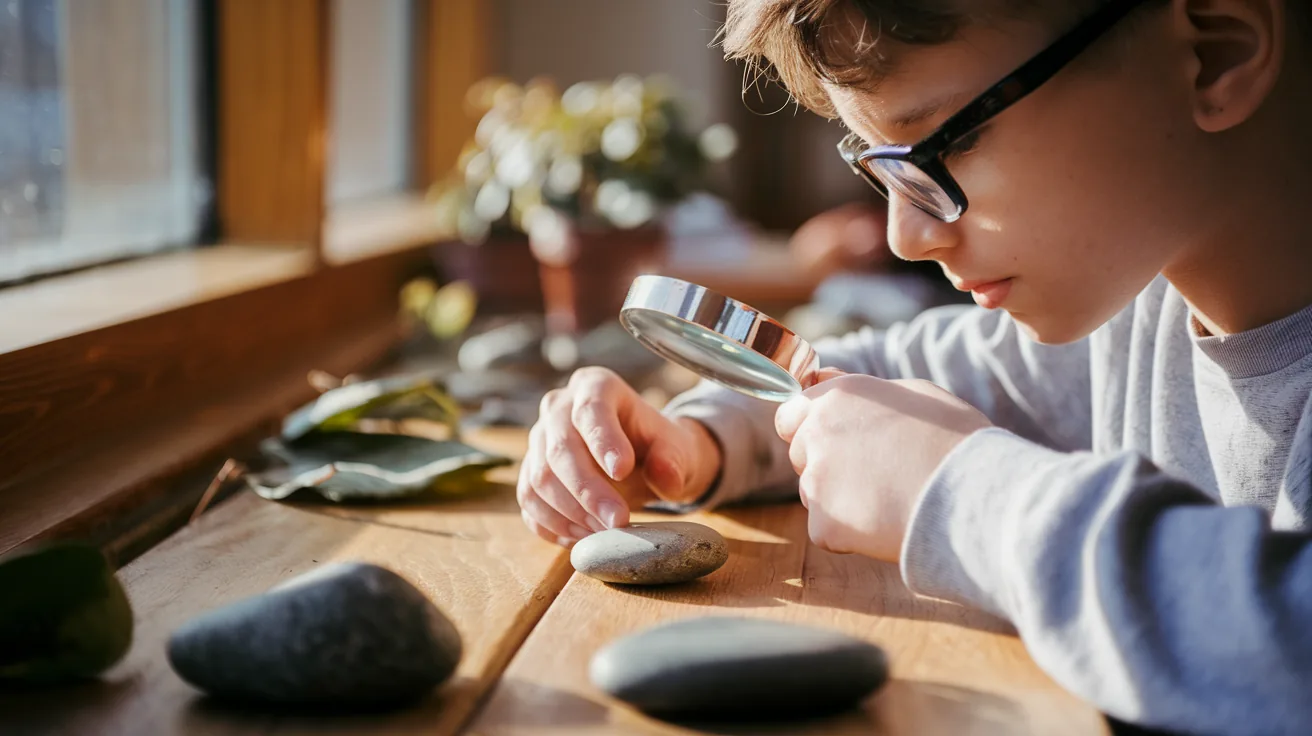
This topic often becomes a firm favourite because magnets feel almost magical. It provides a wonderful entry point into understanding invisible forces.
What Your Child Needs to Know
- Forces as pushes and pulls: Comparing how things move on different surfaces, understanding that some forces need contact (friction) while magnetic forces can act at a distance.
- Magnets: Observing how magnets attract or repel each other and attract some materials but not others. Children should discover that magnetic materials are metals, but not all metals are magnetic.
- Magnetic poles: Understanding that magnets have two poles (north and south), that like poles repel and opposite poles attract.
- Predicting and testing: Predicting whether two magnets will attract or repel, and whether a material will be magnetic.
Common Sticking Points
The single most common misconception in this topic is that all metals are magnetic. Children quickly learn that magnets attract metal objects, then overgeneralise this to assume all metals behave the same way. In reality, only iron, nickel, cobalt, and steel (which contains iron) are commonly magnetic. Aluminium cans, copper wire and gold jewellery are not attracted to magnets (coins are a trap: many modern coins that look like copper are steel underneath, so they are magnetic), and demonstrating this practically is far more effective than simply telling your child.
Children also sometimes struggle with the idea that a force can act without contact. They understand pushes and pulls because they experience them physically, but a magnet moving a paperclip without touching it challenges their intuition. Children need guided exploration and careful questions to bridge the gap between what they can see and what they can understand.
How to Support Revision at Home
- Magnetic treasure hunt. Give your child a magnet and let them test objects around the house. Create a simple table: object, material, magnetic or not? The pattern that emerges (only certain metals are magnetic) is far more powerful when children discover it themselves.
- Floating magnets. Thread ring magnets onto a pencil, alternating poles so they repel and appear to float. Ask your child to explain what's happening.
- Friction ramps. Slide a toy car down a ramp covered in different materials — smooth plastic, sandpaper, fabric, foil. Measure how far the car travels each time and discuss why.
Animals Including Humans: Nutrition and Skeletons
This topic covers two main areas: what animals (including humans) need for nutrition, and the role of skeletons and muscles in the body.
What Your Child Needs to Know
- Nutrition: Animals, including humans, need the right types and amounts of nutrition. Children learn about the main food groups and the importance of a balanced diet.
- Skeletons: Humans and some other animals have skeletons and muscles for support, protection, and movement.
- Comparing skeletons: Children should be able to identify that some animals have a skeleton inside, some have a hard casing outside, and some have no skeleton at all.
Common Sticking Points
Children sometimes struggle to articulate the three functions of a skeleton — support, protection, and movement — and to give specific examples of each. For instance, the skull protects the brain, the ribcage protects the heart and lungs, and bones work with muscles to enable movement.
Nutrition misconceptions are also common. Many children believe that "healthy eating" simply means "eating fruit and vegetables" rather than understanding the concept of a balanced diet that includes carbohydrates, proteins, fats, vitamins, and minerals in appropriate proportions.
How to Support Revision at Home
- Body mapping. Draw around your child on a large sheet of paper (lining paper or taped-together sheets work well). Then draw in the skeleton together, labelling key bones — skull, ribs, spine, pelvis, femur.
- Food diary analysis. Keep a food diary for a day or two, then sort the foods into food groups. Discuss together whether the diet seems balanced and what might be missing.
- Animal classification game. Look at pictures of different animals and sort them into three groups: skeleton inside, hard casing outside, or no skeleton. Include surprises like sharks (cartilage skeleton) and worms (no skeleton) to prompt discussion.
Effective Revision Strategies for Year 3 Science
Now that you know what your child needs to know, here is how to help them revise. Two or three simple habits matter more than hours of worksheets.
Spaced Practice Over Cramming
Ebbinghaus showed in the 1880s that memory fades quickly without review, and a 2013 review by Dunlosky and colleagues rated spaced practice, revisiting material at intervals rather than in one long session, as one of the most effective study techniques. Rather than revising all of "plants" in one evening, return to it briefly over several weeks. Ten minutes three times a week is far more effective than one thirty-minute session.
Retrieval Practice
Simply re-reading notes is one of the least effective revision strategies. Instead, encourage your child to retrieve information from memory. Ask them questions: "Can you tell me three things a plant needs to grow?" or "What happens when two north poles come together?" This active recall strengthens memory pathways far more than passive review.
Embrace Mistakes
When your child gets something wrong — saying all metals are magnetic, for instance — that's not a failure. It's a powerful learning opportunity. A mistake that is examined, tested and corrected is remembered better than a fact that was never in doubt. Ask what made them think that, set up a quick test together, and let the result do the correcting.
That is the whole method: little and often, remembering rather than re-reading, and testing ideas instead of accepting them. Ten minutes at the kitchen table a few times a week will cover all five topics comfortably before the end of the year.